
A spring cleanout dumpster is a temporary waste container, measured in cubic yards, selected to match the debris volume generated by residential cleanup projects. As of 2025, homeowners face four standard residential dumpster sizes (10, 20, 30, and 40 cubic yards), each designed for specific waste disposal scenarios ranging from single-room decluttering to whole house cleaning operations.
Why Accurate Dumpster Size Selection Matters for Spring Cleaning Projects

Choosing the appropriate container directly impacts project efficiency and rental cost. According to waste management industry data from 2024, approximately 37% of homeowners rent dumpsters that prove either too small or unnecessarily large for their actual debris removal needs. A dumpster too small requires costly same-size exchange services or additional rental fees, while an oversized waste receptacle wastes money on unused capacity.
The right dumpster size eliminates multiple disposal trips, reduces overage fees from exceeding weight limits, and prevents project delays. Professional contractors consistently emphasize that proper size selection saves an average of $150-$400 per spring renovation project compared to trial-and-error approaches.
Key Characteristics of Standard Residential Dumpster Sizes
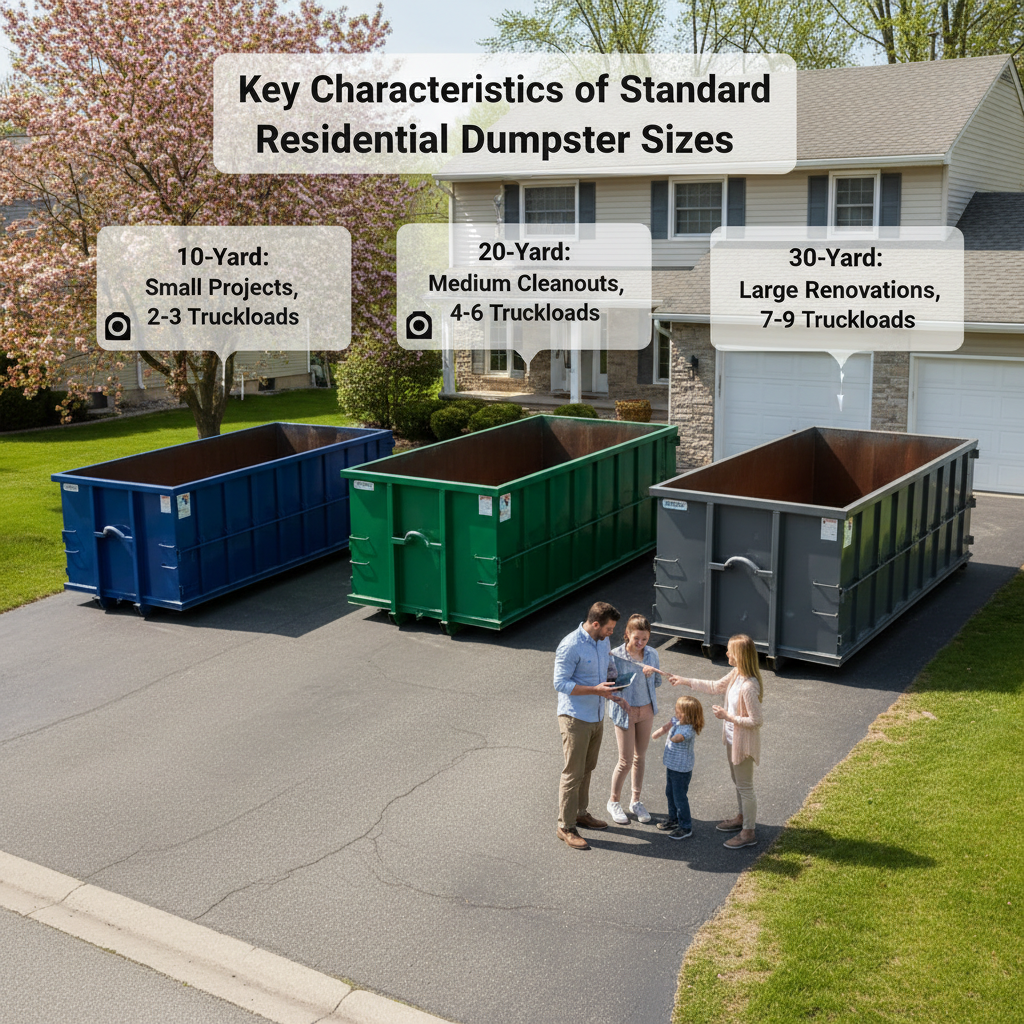
Understanding dumpster capacity requires recognizing that cubic yard measurements represent volume, not weight. One cubic yard equals a 3-foot by 3-foot by 3-foot cube. Residential dumpster rental companies offer four primary roll-off dumpster sizes:
10 Yard Dumpster Specifications
The 10 yard dumpster holds approximately 10 cubic yards of waste, equivalent to 3-4 pickup truck loads. Typical dumpster dimensions measure 12 feet long, 8 feet wide, and 3.5 feet high. This small dumpster suits single-room cleanout projects, garage cleanout operations, or minor yard debris removal. Weight capacity typically ranges from 2-3 tons, with tonnage allowance variations by dumpster rental company.
20 Yard Dumpster Specifications
The 20 yard dumpster accommodates 20 cubic yards of debris, equivalent to 6-8 pickup truck loads. Standard container dimensions reach 22 feet long, 8 feet wide, and 4.5 feet high. This medium dumpster represents the most popular size for homeowners conducting multi-room cleanup or basement cleanout projects. According to 2024 rental data, 20-yard containers account for 42% of residential dumpster rental requests. Weight limits typically extend to 3-4 tons.
30 Yard Dumpster Specifications
The 30 yard dumpster provides 30 cubic yards capacity, equivalent to 9-12 pickup truck loads. Typical dimensions span 22 feet long, 8 feet wide, and 6 feet high. This large dumpster handles major cleanout projects including attic cleanout combined with basement cleanup, or significant home renovation debris. Property managers frequently select this size for estate cleanout or foreclosure cleanup operations. Weight capacity extends to 4-5 tons.
40 Yard Dumpster Specifications
The 40 yard dumpster offers maximum residential capacity at 40 cubic yards, equivalent to 12-16 pickup truck loads. Standard dimensions measure 22 feet long, 8 feet wide, and 8 feet high. This extra large dumpster suits complete home cleanout, whole house cleaning during moves, or hoarder cleanout scenarios. Commercial dumpster applications also utilize this size for construction debris removal. Weight limits reach 5-6 tons depending on waste hauling company policies.
How to Calculate the Right Dumpster Size for Your Spring Cleanout
Estimating debris volume for dumpster selection follows a systematic methodology:
Step 1: Inventory Your Disposal Items
List all items requiring disposal by category: furniture disposal, appliance removal, household junk, yard waste, and renovation debris. Document quantities (e.g., “3 sofas, 2 mattresses, 15 bags of clothing”).
Step 2: Apply Volume Estimation Guidelines
Use these industry-standard conversions for common spring cleaning items:
- One full room of furniture and contents = 2-3 cubic yards
- One standard appliance (refrigerator, washer) = 1-1.5 cubic yards
- One mattress disposal = 1 cubic yard
- Ten 33-gallon trash bags = 1 cubic yard
- Flooring removal (200 sq ft) = 2 cubic yards
- Drywall debris (500 sq ft) = 5 cubic yards
Step 3: Account for Debris Density
Heavy materials like concrete, roofing shingles, or dirt require smaller containers due to weight capacity restrictions. A 10 yard dumpster holds approximately 3 tons of concrete but 10 cubic yards of household waste. Consult your dumpster rental company regarding weight limit specifications for dense construction waste.
Step 4: Add 20% Buffer Capacity
Professional organizers recommend increasing your calculated volume by 20% to prevent overfilled dumpster situations. Spring cleaning projects consistently generate more debris than initial estimates suggest, particularly during attic cleanout or garage decluttering.
Common Misconceptions About Dumpster Sizing
Myth: A smaller dumpster always costs less than a larger one.
Reality: Renting a dumpster too small often requires additional rental fees or overage charges exceeding the cost difference between sizes. A 20 yard dumpster typically costs only $50-$100 more than a 10 yard dumpster, but eliminates risk of insufficient capacity.
Myth: You can accurately convert square footage directly to cubic yards.
Reality: Converting square feet to dumpster size requires knowing debris depth. A 200 square foot room generates vastly different waste volumes depending on whether you’re removing furniture (2-3 cubic yards) versus complete demolition (15-20 cubic yards).
Myth: All dumpster rental companies use identical size measurements.
Reality: While cubic yard capacity remains standard, actual dumpster dimensions vary by manufacturer. Always confirm physical dimensions for driveway placement or street placement scenarios with spatial constraints.
Myth: Weight limits don’t matter for household waste.
Reality: Even household junk can exceed tonnage allowance. According to waste management data, 22% of residential customers incur overage fees, averaging $75 per additional ton. Heavy items like appliance disposal, mattress disposal, and furniture removal accumulate weight quickly.
Dumpster Size vs. Project Type Matching Guide
| Project Type | Recommended Size | Typical Debris Volume | Rental Duration |
|---|---|---|---|
| Single room cleanout (bedroom, office) | 10 yard dumpster | 2-3 cubic yards | Weekend rental (3-4 days) |
| Garage cleanout or shed removal | 10-20 yard dumpster | 4-6 cubic yards | Week-long rental (7 days) |
| Basement cleanout (no demolition) | 20 yard dumpster | 8-12 cubic yards | Week-long rental (7 days) |
| Attic cleanout project | 20 yard dumpster | 6-10 cubic yards | Weekend to week-long rental |
| Multiple room cleanup (3-4 rooms) | 20-30 yard dumpster | 12-18 cubic yards | Week-long rental (7-10 days) |
| Whole house cleaning (pre-move) | 30-40 yard dumpster | 20-35 cubic yards | Short-term rental (10-14 days) |
| Estate cleanout (full property) | 40 yard dumpster | 30-40 cubic yards | Flexible rental (14+ days) |
| Yard waste removal (major landscaping) | 20-30 yard dumpster | 10-20 cubic yards | Weekend rental (3-5 days) |
| Home renovation (kitchen or bathroom) | 20 yard dumpster | 10-15 cubic yards | Week-long rental (7-14 days) |
| Roofing shingles removal (1500 sq ft roof) | 20 yard dumpster (10 yd for weight) | 5-7 cubic yards (8-10 tons) | Short-term rental (3-5 days) |
Practical Spring Cleaning Scenarios with Optimal Size Selection
Scenario 1: Annual Spring Decluttering
A homeowner tackling routine spring cleaning across a 2,000 square foot home typically generates 4-8 cubic yards of disposal volume. This includes furniture disposal (old couch, chairs), appliance removal (broken appliances), clothing donation rejects, and general household waste accumulation. The best dumpster size for home cleanout project of this scope: 10 yard dumpster for modest cleanouts, 20 yard dumpster for thorough decluttering. Rental duration recommendation: weekend rental for focused work, week-long rental for gradual accumulation.
Scenario 2: Moving Cleanout
Downsizing or estate cleanout scenarios generate substantial debris. A complete home cleanout before selling typically produces 25-35 cubic yards including furniture removal, appliance disposal, accumulated storage items, and property cleanup waste. What size dumpster for moving cleanout: 30 yard dumpster for partial home contents, 40 yard dumpster for complete home cleanout. Consider scheduled pickup timing around closing dates for flexible rental periods.
Scenario 3: DIY Renovation Combined with Spring Cleaning
Home renovation projects generate mixed waste streams. A kitchen remodel produces approximately 12-15 cubic yards (old cabinets, countertops, flooring), plus an additional 5-8 cubic yards from concurrent spring cleaning. Total dumpster size for DIY renovation with cleanout: 20 yard dumpster for single-room renovation, 30 yard dumpster for major cleanout project spanning multiple rooms. Monitor weight capacity when disposing of demolition debris like drywall or concrete.
Scenario 4: Hoarder Cleanout or Extreme Decluttering
Severe clutter elimination projects require maximum capacity. According to professional junk removal service data from 2024, what size dumpster for hoarder cleanout typically demands 30-40 cubic yards. These projects generate 25-40 cubic yards of mixed household junk, furniture, and refuse removal needs. Select 40 yard dumpster for safety margin, allowing on-demand dumpster exchange if needed.
Cost-Effective Dumpster Size Selection Strategy
Optimizing disposal costs requires balancing rental pricing against overage fee risks. Industry data shows average dumpster rental cost by size (as of 2025):
- 10 yard dumpster: $250-$400
- 20 yard dumpster: $300-$500
- 30 yard dumpster: $350-$600
- 40 yard dumpster: $400-$700
The price differential between consecutive sizes typically ranges $50-$100, while overage fees average $75-$100 per ton beyond tonnage allowance. Calculating dumpster size for spring project costs reveals that sizing up prevents expensive overages. Save money choosing right dumpster size by selecting the next larger size when estimated volume falls near a threshold.
For comprehensive waste disposal solutions, Dump It offers detailed dumpster rental size comparison tools and local pricing guidance to help homeowners avoid common mistakes choosing dumpster size.
Permit Requirements and Placement Considerations
Local municipality and HOA regulations often mandate permit requirements for dumpster placement. Street placement typically requires permits costing $10-$75 depending on jurisdiction, while driveway placement rarely needs permits. Confirm requirements with your dumpster rental company during booking.
Container dimensions affect placement feasibility. A 40 yard dumpster requires 22 feet of linear space plus clearance for delivery service trucks (60-foot total). Measure placement areas carefully, accounting for overhead clearance (minimum 23 feet for delivery truck arms) and surface protection needs.
Selecting Between Temporary Dumpster Options
Beyond size, consider rental period flexibility. Weekend rental options suit concentrated cleanup efforts, while week-long rental or flexible rental arrangements accommodate gradual spring cleaning schedules. Most dumpster rental companies offer 7-14 day rental periods as standard, with extension options at daily rates averaging $5-$15.
Refuse container accessibility matters for efficient loading. Roll-off containers feature low sides relative to traditional waste bins, enabling furniture disposal and appliance removal without lifting items overhead. This accessibility advantage makes residential dumpster solutions superior to multiple junk removal service trips for spring cleanout projects.
Final Recommendations for Determining Right Dumpster Size
How to choose dumpster size for cleanout success follows these principles: calculate conservatively using volume estimation guidelines, add 20% buffer capacity, prioritize weight capacity for dense materials, and consult contractor recommended dumpster sizes for renovation components. When uncertain between sizes, the most cost-effective size selection typically involves choosing the larger option to prevent costly overage scenarios.
Professional organizer dumpster size tips consistently emphasize that homeowners underestimate debris volume by 30-40%. This systematic underestimation makes determining right dumpster size for spring cleaning inherently challenging without professional guidance or dumpster size calculator tools. Request dumpster size guide assistance from your waste management provider to avoid renting wrong size dumpster for your specific cleanup project requirements.