
Dumpster rental restrictions are waste disposal rules established by the Environmental Protection Agency (EPA), state regulations, and local ordinances that define which materials are acceptable waste materials and which are prohibited dumpster items. These waste disposal guidelines protect landfills, recycling centers, and waste management services from contamination while ensuring environmental compliance. According to the EPA as of 2025, improper disposal of hazardous materials can result in fines exceeding $70,000 per violation for both renters and dumpster rental companies.
Why Dumpster Waste Disposal Rules Matter
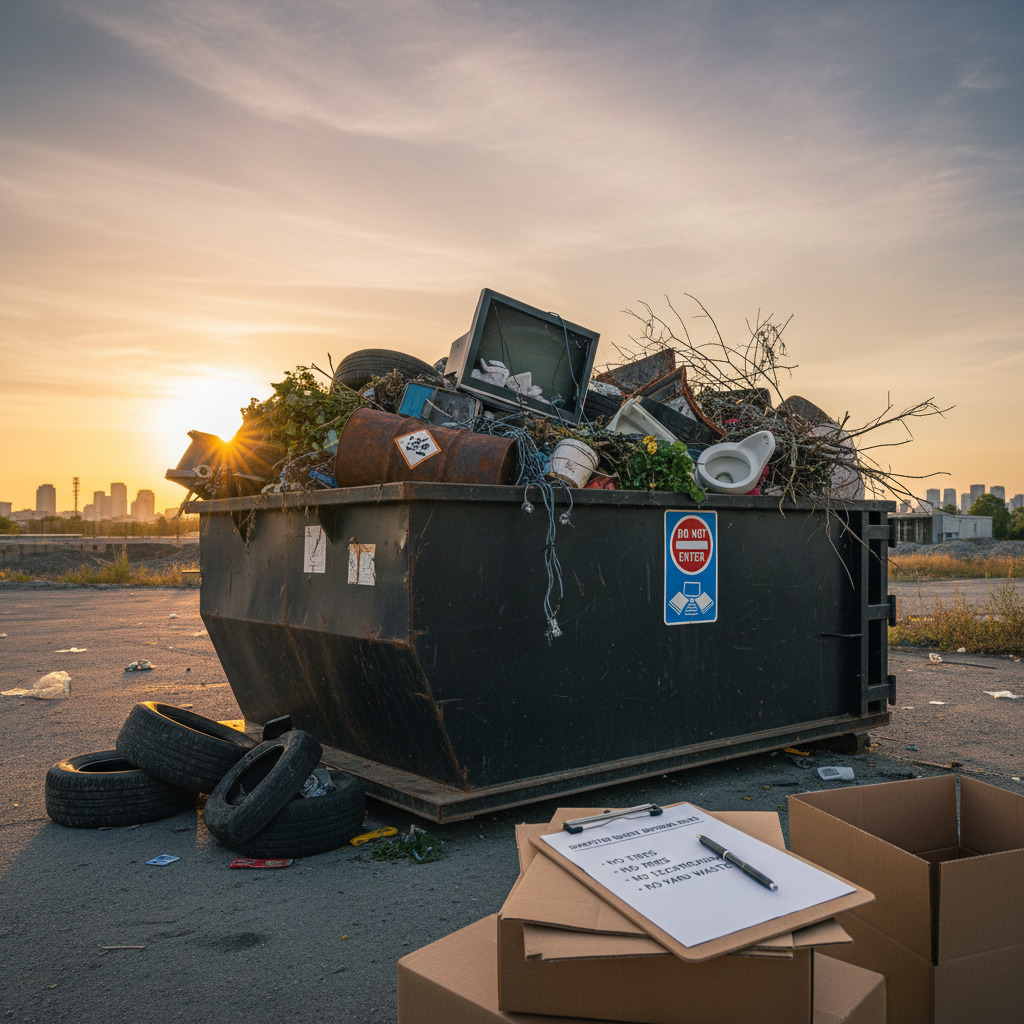
Waste disposal regulations exist to prevent toxic materials from contaminating municipal solid waste streams, endangering waste haulers, and damaging landfill infrastructure. A single contaminated load can shut down an entire recycling center for days. Dumpster rental companies must comply with federal guidelines from the EPA, state-specific regulations, and local ordinances from sanitation departments. Violating these disposal regulations can result in waste disposal fees, contamination penalties, and legal liability. Understanding permitted materials versus banned substances helps renters avoid overfilling penalties, unexpected charges, and environmental harm.
Key Characteristics of Dumpster Rental Acceptable Items
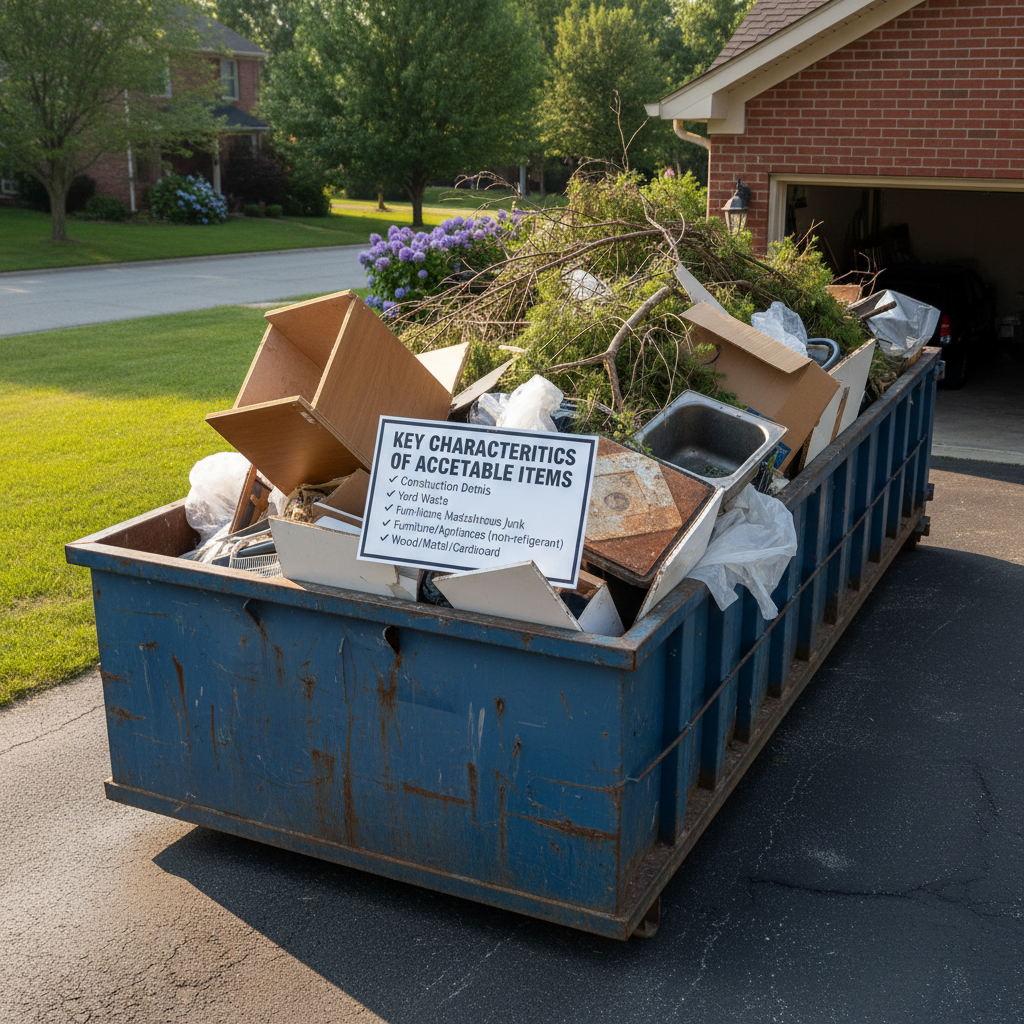
Acceptable materials in roll-off dumpsters share three defining traits. First, they are non-hazardous materials that pose no chemical, biological, or explosive risk. Second, they are compatible with standard landfill restrictions or can be processed at recycling centers. Third, they meet container weight limits established by waste management companies. According to industry standards as of 2025, most residential dumpster rentals accept household waste, construction debris, and certain recyclable materials without additional fees.
Four Primary Categories of Permitted Materials
- Construction and Demolition Waste: Concrete, asphalt, shingles, drywall, wood waste, insulation materials, brick, cabinets and countertops, flooring materials, windows and doors, and fencing.
- Household Items: Furniture, non-hazardous appliances, mattresses (in most jurisdictions), carpet, packaging waste, shipping materials, cardboard and paper, and general household waste.
- Yard and Organic Waste: Yard waste, green waste, tree branches, soil and dirt (clean fill), and lightweight materials like leaves.
- Recyclable Materials: Scrap metal, clean loads of separated materials, paper recycling, cardboard recycling, metal recycling, and certain plastic recycling items.
What Items Are Prohibited in Rental Dumpsters
Prohibited dumpster items include hazardous waste, toxic materials, and substances that violate EPA regulations or local waste management guidelines. These materials require disposal at specialized hazardous waste facilities, electronics recycling centers, or universal waste collection sites. Attempting to dispose of banned substances in a rental container results in contamination fees averaging $300-$800 per incident as of 2025.
Hazardous Material Disposal Restrictions
Hazardous waste facility disposal is mandatory for chemicals, solvents, pesticides, motor oil, antifreeze, paint (liquid), propane tanks, fuel containers, fluorescent bulbs, batteries, and industrial cleaning agents. These substances meet EPA criteria for ignitability, corrosivity, reactivity, or toxicity. According to federal guidelines updated in 2024, mixing hazardous materials with municipal solid waste is prohibited across all 50 states.
Special Waste and Universal Waste Items
Special waste categories require alternative disposal methods. E-waste and electronics recycling facilities must process televisions, computers, monitors, and cell phones. Tires require specialized tire recycling programs. Appliances containing refrigerants (refrigerators, air conditioners) need Freon removal before disposal. Medical waste, biohazard materials, and contaminated waste demand biohazard disposal protocols. Asbestos and lead-based materials require certified abatement contractors.
Items Banned by Most Dumpster Rental Companies
| Category | Prohibited Items | Disposal Alternative |
|---|---|---|
| Liquids | Paint, motor oil, antifreeze, solvents | Hazardous waste facility, municipal collection events |
| Pressurized Containers | Propane tanks, fuel containers, compressed gas cylinders | Retailer take-back programs, hazmat centers |
| Electronics | TVs, computers, monitors, printers | Electronics recycling centers, manufacturer programs |
| Batteries | Car batteries, lithium batteries, rechargeable batteries | Retail drop-off, universal waste programs |
| Regulated Materials | Asbestos, lead paint, medical waste | Licensed disposal contractors only |
How Dumpster Rental Waste Disposal Guidelines Work
Waste disposal regulations follow a three-tier hierarchy. Federal guidelines from the EPA establish baseline standards for hazardous material disposal, universal waste, and environmental compliance. State regulations add jurisdiction-specific requirements for waste stream management and refuse disposal. Local ordinances from municipal sanitation departments create additional debris classification rules and material restrictions. When conflicts arise, the most restrictive regulation applies.
The Dumpster Rental Inspection Process
Dumpster rental companies inspect loads at three points. Pre-delivery consultations identify project type and anticipated debris. On-site inspection occurs during pickup when waste haulers verify load composition. Final verification happens at the landfill or transfer station where contaminated waste triggers rejection and fees. According to industry data from 2025, approximately 8% of dumpster loads require special handling or resorting due to prohibited materials.
Can You Throw Furniture in a Rented Dumpster?
Yes, furniture disposal is permitted in most residential dumpster rentals. Couches, tables, chairs, dressers, and desks are acceptable waste materials for standard roll-off containers. However, donation options through reuse programs provide eco-friendly disposal alternatives. Estate cleanouts and whole house cleanouts commonly include furniture in bulk trash removal. Some jurisdictions charge additional fees for mattresses due to recycling requirements implemented between 2020-2024.
What Appliances Can Go in a Dumpster?
Non-refrigerant appliances like stoves, dishwashers, washing machines, and dryers are allowed in construction dumpsters and residential rentals. Refrigerators and air conditioners require Freon removal by certified technicians before disposal in dumpsters. According to EPA regulations as of 2025, releasing refrigerants violates the Clean Air Act and carries penalties up to $37,500 per violation. Many waste management services offer appliance disposal as an add-on service with proper refrigerant handling.
Common Misconceptions About Dumpster Rental Restrictions
Myth vs. Reality Format
Myth: All construction debris is acceptable in rental dumpsters.
Reality: While most construction waste removal includes concrete, asphalt, shingles, drywall, and wood waste, contaminated materials and asbestos-containing materials are strictly prohibited. Clean fill dirt may require separate containers.
Myth: Paint cans can go in dumpsters if they’re empty.
Reality: Dried latex paint cans are generally acceptable, but liquid paint and oil-based paint require hazardous waste facility disposal. As of 2025, most local ordinances require solidifying liquid paint with absorbent materials before disposal.
Myth: Yard waste and green waste always belong in standard dumpsters.
Reality: Many municipalities require separate organic waste collection for composting programs. Tree stumps may be prohibited due to weight and decomposition issues. Check local sanitation department guidelines.
Myth: Electronics are acceptable if they’re broken beyond repair.
Reality: All e-waste requires electronics recycling regardless of condition. Toxic materials in circuit boards, screens, and batteries mandate specialized processing at electronics recycling centers.
Myth: Small quantities of hazardous materials won’t cause problems.
Reality: Even minimal amounts of chemicals, solvents, or pesticides can contaminate entire loads, resulting in disposal alternatives requirements and contamination fees.
Rental Container Regulations vs. Curbside Trash vs. Specialized Disposal
Dumpster rental services differ significantly from municipal curbside collection and specialized hazmat disposal. Curbside trash accepts limited household waste with strict weight and volume restrictions. Junk removal services provide convenience but cost 2-3 times more than roll-off container rentals. Hazardous waste facilities accept toxic materials but require specific drop-off times and documentation. Commercial waste disposal follows stricter debris classification and waste segregation rules than residential services.
Comparison Table: Disposal Method Capabilities
| Disposal Method | Acceptable Materials | Volume Capacity | Typical Cost (2025) |
|---|---|---|---|
| Rental Dumpster | Construction debris, household waste, furniture, appliances | 10-40 cubic yards | $300-$800/week |
| Curbside Collection | Bagged household trash only | Limited to 1-3 bags | Included in utilities |
| Junk Removal Service | Most non-hazardous items | Truck-load basis | $400-$1,200/load |
| Hazardous Waste Facility | Chemicals, paint, batteries, e-waste | Varies by material | Free to $50/item |
Practical Applications: How to Properly Load a Rental Dumpster
Renovation projects, construction sites, estate cleanouts, and commercial cleanouts each require different waste sorting approaches. Proper waste segregation maximizes container capacity while avoiding contamination fees. Break down large items like furniture and cabinets. Place heavy debris like concrete and brick on the bottom layer. Distribute weight evenly to prevent exceeding container weight limits (typically 2-10 tons depending on dumpster size selection).
Renovation Project Guidelines
Remodeling waste from kitchen, bathroom, or whole-house renovations generates mixed debris including drywall, flooring materials, cabinets, fixtures, and packaging waste. Separate recyclable materials like metal recycling items and cardboard recycling when possible. Schedule dumpster delivery before demolition begins. Kitchen remodels produce 1-3 tons of debris, while whole-house projects generate 5-8 tons according to 2025 industry averages.
Construction Site Waste Management
New construction generates cleaner waste streams than demolition. Separate clean fill dirt, concrete, asphalt, and wood waste into designated containers when possible. This waste stream management reduces landfill restrictions and qualifies for recycling rebates. Construction dumpster prohibited materials guide requirements mandate removing all hazardous materials before delivery to construction sites.
Estate Cleanouts and Foreclosure Cleanup
Estate cleanouts and hoarding situations require careful sorting. Identify salvageable materials and reusable items for donation options. Dump It and similar junk removal services can help separate valuable items from true refuse. Basement cleanouts, attic cleanouts, and garage cleanouts often uncover obsolete materials requiring special disposal, including old paint products, pesticides, and damaged goods.
Container Weight Limits and Overfilling Penalties
Dumpster rental weight limit restrictions explained: Standard 10-yard dumpsters hold 2-3 tons, 20-yard containers accommodate 3-4 tons, and 40-yard dumpsters support up to 5-6 tons for lightweight materials or 10 tons for heavy debris. Exceeding limits results in overfill fees of $50-$100 per ton as of 2025. Fill containers to the top rail maximum—overfilling prevents safe transport and violates DOT regulations.
How to Dispose of Hazardous Waste Instead of Dumpsters
Disposal alternatives for banned items include municipal collection events, manufacturer take-back programs, and permanent hazardous waste facilities. Most communities host 2-4 collection events annually accepting paint products, chemicals, pesticides, batteries, and e-waste at no charge. Retailer programs accept batteries, fluorescent bulbs, and electronics. Check your sanitation department website for schedules and accepted materials lists updated as of 2025.
Sustainable Waste Practices and Green Waste Management
Eco-friendly disposal prioritizes donation, recycling, and reuse before landfill disposal. Furniture donation centers accept usable items from estate cleanouts. Scrap metal buyers pay for metal recycling loads. Cardboard and paper require separate recycling bins at most commercial waste disposal sites. Green waste management programs compost organic materials, diverting waste from landfills while creating soil amendments.
Final Recommendations for Waste Disposal Compliance
Contact your dumpster rental company before delivery to clarify acceptable items and material restrictions. Review local ordinances through your sanitation department website. Separate prohibited materials before the waste hauler arrives. Document load contents with photos for commercial waste disposal projects. Budget for disposal alternatives when projects generate hazardous materials, e-waste, or special waste. Following these waste disposal guidelines ensures environmental compliance, avoids contamination fees, and supports sustainable waste practices.