
A roll-off dumpster is an open-top waste container delivered to residential, commercial, or industrial sites for temporary debris removal and transported to landfills or transfer stations via specialized trucks. Understanding what materials are acceptable and prohibited in these containers is essential for environmental compliance, avoiding disposal fees, and protecting public health.
Why Roll-Off Dumpster Restrictions Matter
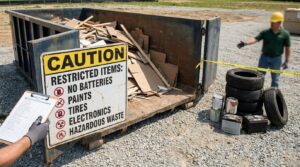
According to the EPA (Environmental Protection Agency), improper waste disposal causes soil contamination, groundwater pollution, and public health hazards. Local waste authorities and dumpster rental companies enforce strict disposal guidelines to comply with federal regulations established under the Resource Conservation and Recovery Act. Violating these restrictions results in additional fees ranging from $50 to $500 per prohibited item, project delays, and potential environmental fines. As of 2025, all waste management operations must follow material restrictions to prevent contamination of the waste stream and ensure safe disposal practices.
Acceptable Materials: What Can Go in a Roll-Off Dumpster
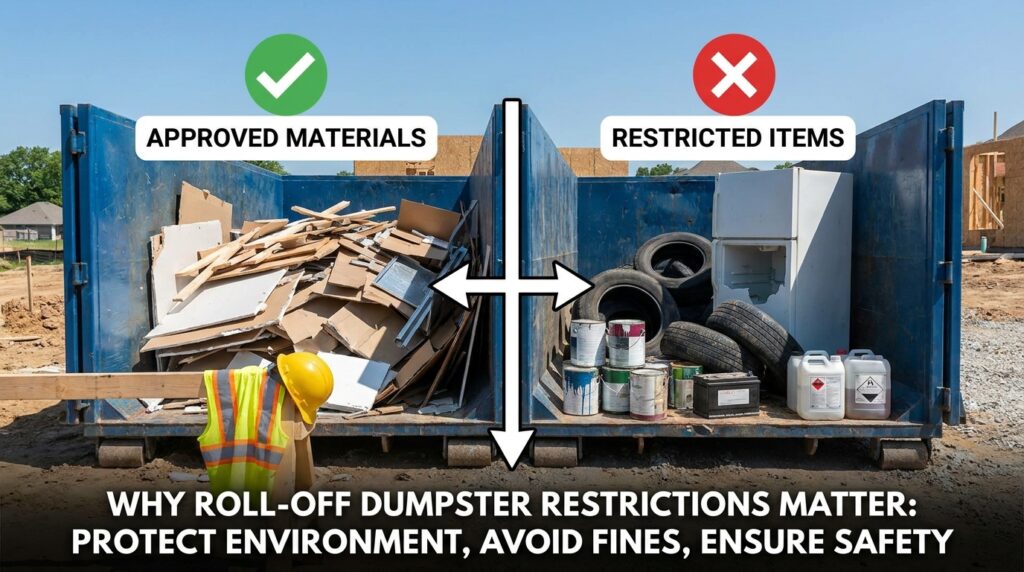
Roll-off dumpsters accept three primary waste categories: construction debris, household waste, and yard waste. Each category has specific acceptable waste materials and proper waste disposal requirements.
Construction and Demolition (C&D) Debris
Construction waste disposal accounts for approximately 600 million tons annually in the United States. Acceptable construction debris includes:
- Concrete and asphalt: Broken slabs, foundation pieces, driveways, and paving materials qualify as inert materials suitable for recycling or landfill disposal
- Wood materials: Lumber, plywood, framing, cabinets, and dimensional wood from demolition or renovation debris
- Drywall: Sheetrock and gypsum board without mold contamination
- Metal: Steel beams, aluminum siding, copper pipes, and iron fixtures classified as salvageable materials
- Roofing materials: Asphalt shingles, wood shakes, and metal roofing qualify for construction dumpster disposal
- Flooring: Hardwood, laminate, tile, and vinyl flooring removed during renovation projects
Household and Residential Waste
Residential dumpster services accept non-hazardous household waste during cleanout services, estate cleanouts, and moving projects. Permissible materials include:
- Furniture: Couches, chairs, tables, dressers, and bed frames
- Mattresses: Box springs and mattresses (some jurisdictions require separate recycling fees)
- Appliances without refrigerants: Dishwashers, stoves, washing machines, and dryers (Freon-containing units require special handling)
- Carpet and padding: Rolled or folded residential and commercial carpet
- Cardboard and paper products: Boxes, packaging materials, and bulk paper waste
- Household clutter: Books, clothing, toys, and general throwaway items
Yard Waste and Organic Materials
Green waste and organic materials require specific disposal methods depending on local waste authority regulations. Acceptable yard waste includes:
- Tree branches and limbs: Branches under 6 inches in diameter and 4 feet in length
- Leaves and grass clippings: Bagged or loose organic materials
- Shrub trimmings: Pruning debris and hedge clippings
- Soil and dirt: Clean fill dirt without contamination (weight limits apply)
For comprehensive information about proper material disposal, review what can go in a dumpster before starting your project.
Prohibited Items: What Cannot Go in Roll-Off Dumpsters
Hazardous materials, regulated materials, and certain special waste categories are banned from roll-off dumpster disposal. These restrictions protect waste haulers, landfill operations, and the environment from dangerous substances.
Hazardous Waste and Chemicals
The EPA classifies these banned substances as hazardous waste requiring special waste handling:
- Paint and stains: Liquid or semi-liquid paint, varnish, lacquer, and wood stains contain volatile organic compounds
- Automotive fluids: Motor oil, transmission fluid, antifreeze, and brake fluid
- Chemicals and solvents: Cleaning products, pesticides, herbicides, pool chemicals, and industrial solvents
- Adhesives and sealants: Epoxy, glue, caulk, and construction adhesives in liquid form
- Asbestos: Friable asbestos-containing materials require certified abatement and specialized disposal
Electronic Waste and Appliances with Refrigerants
E-waste recycling programs handle electronics containing hazardous components:
- Refrigerators and air conditioners: Appliances with Freon or refrigerant require professional removal
- Televisions and monitors: Cathode ray tubes contain lead and require universal waste processing
- Computers and electronics: Desktop computers, laptops, printers, and peripherals contain heavy metals
- Fluorescent bulbs: Tubes and compact fluorescent lamps contain mercury vapor
Automotive and Industrial Items
These materials require specialized disposal methods:
- Tires: Passenger vehicle and truck tires require separate tire recycling programs
- Batteries: Lead-acid batteries, lithium-ion batteries, and alkaline batteries need material recovery facilities
- Propane tanks: Compressed gas cylinders pose explosion risks and require hazmat disposal
- Car parts: Gas tanks, oil filters, and contaminated automotive components
Medical and Biohazard Waste
Medical waste disposal requires licensed medical waste haulers and sanitary handling protocols. Prohibited medical items include needles, syringes, contaminated materials, pharmaceuticals, and biological specimens.
Common Misconceptions About Dumpster Rental Restrictions
Myth: All household trash qualifies as acceptable waste in roll-off dumpsters.
Reality: While most residential waste is acceptable, hazardous household products like paint, batteries, and cleaning chemicals require alternative disposal methods at recycling centers or household hazardous waste collection events.
Myth: Construction dumpsters accept unlimited concrete and heavy materials.
Reality: Roll-off dumpsters have weight limits ranging from 2 to 10 tons depending on container size. Exceeding weight restrictions results in surcharge items fees of $50 to $100 per ton over the limit.
Myth: Refrigerators can go in dumpsters after removing doors.
Reality: Appliances containing refrigerants require certified technicians to recover Freon before disposal. Dumpster rental companies charge additional fees of $25 to $75 per appliance for proper handling.
Proper Disposal Alternatives for Prohibited Items
Local waste authorities provide disposal alternatives for materials banned from roll-off dumpsters:
- Hazmat disposal facilities: Municipal collection centers accept paint, chemicals, automotive fluids, and pesticides during scheduled collection events
- E-waste recycling: Electronics retailers and specialized facilities process computers, televisions, and fluorescent bulbs through material recovery programs
- Tire recycling centers: Dedicated tire collection facilities process passenger and commercial vehicle tires
- Battery recycling: Automotive retailers and municipal programs accept lead-acid batteries and rechargeable batteries
- Donation alternatives: Charitable organizations accept reusable items like furniture, appliances, and household goods in working condition
Weight Limits and Material Restrictions
Dumpster service providers enforce weight limits to comply with Department of Transportation regulations and prevent vehicle damage. Standard weight restrictions range from 4,000 pounds for 10-yard containers to 20,000 pounds for 40-yard roll-off containers. Heavy materials like concrete, asphalt, dirt, and brick fill containers quickly and may require dedicated disposal trips. Lightweight debris including wood, drywall, and cardboard maximizes container capacity without exceeding weight thresholds.
Regional Variations in Disposal Guidelines
Roll-off dumpster restrictions by state and local regulations vary significantly. Some municipalities prohibit yard waste in landfill-bound containers and require diversion programs for organic materials. Other jurisdictions mandate waste segregation for recyclable materials like metal, cardboard, and wood. Contact your dumpster rental company or local waste authority before loading to ensure environmental compliance and avoid contamination prevention violations.