Yes, you need a permit to put a dumpster on the street in Indianapolis, and it’s worth getting one if the dumpster will sit on any public right-of-way, including streets, parking lanes, sidewalks, or alleys. The City of Indianapolis requires a Right-of-Way Use Permit for any roll-off dumpster placed in public space, and placing one without a permit can lead to fines or forced removal. This guide explains when the permit applies, what it costs, and how to decide whether your project needs one.
When Is a Dumpster Permit Required in Indianapolis?
A Right-of-Way Use Permit is required any time a roll-off dumpster sits in the public right-of-way in Indianapolis. This includes:
A public street or parking lane
A city-owned curb or sidewalk
A public alley next to a residential or commercial property
Any placement that narrows a traffic lane or pedestrian path
If the dumpster sits entirely on private property, such as a driveway or yard, no city permit is needed. This is the biggest factor in deciding whether you need a dumpster permit in Indianapolis. Even partial overhang onto a sidewalk or curb strip can put the dumpster in the right-of-way, so homeowners with narrow driveways should measure carefully before assuming they’re exempt.
In older Indianapolis neighborhoods like Irvington, Fountain Square, and Broad Ripple, many driveways are too short or narrow for a standard 20-yard roll-off, so many residents end up needing a permit.
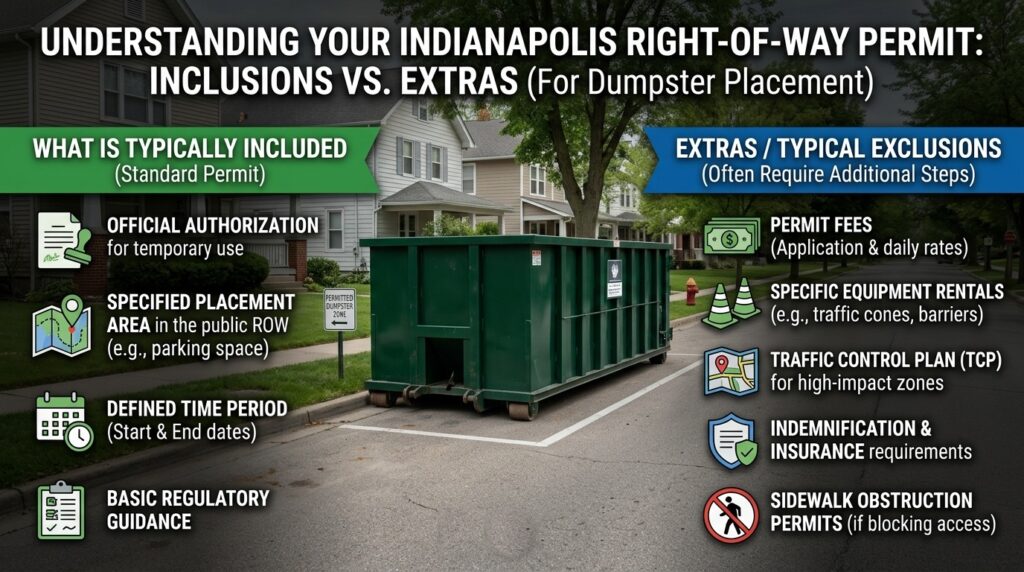
What You Get With a Right-of-Way Permit (Inclusions vs. Extras)
Included in Permit
Not Included (Extra Cost/Steps)
Legal authorization to place the dumpster in the right-of-way
Dumpster rental fees, billed separately by the hauler
Approved placement location and dates
Extensions beyond the approved dates
Compliance with city right-of-way rules
Traffic control devices (cones, signage, reflectors) if required
Right to occupy a specific street or curb segment
Additional approvals for larger obstructions, such as lane closures
Protection from fines for unpermitted placement
Repairs to any public property damaged during placement
The permit covers where the dumpster sits, not what goes in it. Disposal restrictions, such as bans on hazardous waste, tires, or certain electronics, are set by your hauler and local solid waste rules, not by the permit.
Residential vs. Commercial Dumpster Permits
Residential projects like roof replacements or garage cleanouts and commercial projects like construction debris removal use the same Right-of-Way Use Permit process. Requirements can vary based on the project’s size and how much of the street or sidewalk is affected.
Commercial applications often need more documentation, such as a site plan showing the dumpster’s exact footprint relative to lane markings, fire hydrants, and storm drains. Larger or longer projects, such as multi-week demolitions, may also need traffic control plans or additional approvals if the obstruction affects a full lane or sidewalk.
Cost Breakdown: Dumpster Permit Fees in Indianapolis (2026)
Standard Right-of-Way Use Permit fee: about $55
Extensions: May require an additional fee or new application if your project runs past the approved dates
Unpermitted placement: Can result in fines and removal of the dumpster at the owner’s expense
A typical 10- to 20-yard roll-off rental in the Indianapolis area runs $300–$550 for a standard rental period, billed separately by the waste hauler. That means the permit usually adds only a small share to your total project cost. The risk of fines, removal costs, and project delays makes the permit well worth it.
Where to Apply for a Dumpster Permit in Indianapolis
The Right-of-Way Use Permit is administered by the Department of Business and Neighborhood Services (DBNS) and the Department of Public Works (DPW). Applications are submitted online through the city’s Accela Citizen Access portal. Many homeowners skip the paperwork entirely by choosing a dumpster rental company that handles the dumpster permit Indianapolis process for them.
Reviews typically take 5–7 business days, so apply well before your delivery date. Be ready to provide the project address, placement dates, dumpster dimensions, and the exact location (street, parking lane, sidewalk, or alley).
Expected Benefits & ROI Analysis
The return on a street dumpster permit comes mainly from avoiding risk, not from direct savings.
Avoided fines: An approximately $55 permit helps you avoid fines and removal costs that can far exceed the permit fee.
Fewer liability questions: A permit shows the dumpster was placed legally, which can help if it’s involved in a traffic or pedestrian incident. Owners and contractors are still responsible for safe placement and markings.
Project continuity: A permitted dumpster that follows its permit conditions is far less likely to be tagged for removal mid-project.
Insurance compliance: Many contractor insurance policies require proper permits for equipment placed in the public right-of-way.
Clear paper trail: A permit number makes it easy to resolve complaints from neighbors or passersby.
For contractors managing several job sites at once, the benefit is even greater, since one unpermitted dumpster can delay multiple crews if it’s tagged for removal. A permit also helps with neighbors, who are generally more tolerant of a weeks-long dumpster when they know it’s approved.
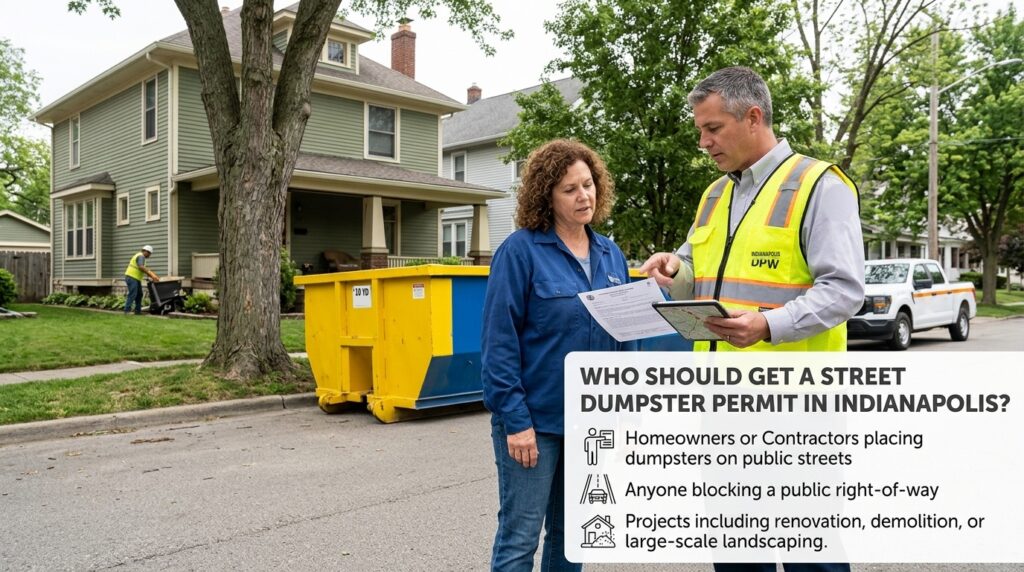
Who Should Get a Street Dumpster Permit
Contractors handling construction debris removal on job sites without driveway access
Homeowners renovating properties with limited or no private parking space
Property managers overseeing dumpster placement for multi-unit buildings
Anyone whose roll-off dumpster will sit on a public street, curb, sidewalk, or alley, even briefly
Event organizers placing temporary waste containers on public streets
Who Doesn’t Need a Permit
Homeowners placing a dumpster entirely within a private driveway or yard
Properties with enough off-street space to keep the dumpster out of the right-of-way
Small cleanouts that can use regular trash pickup or bulk item collection instead of a roll-off
Alternatives to a Street Dumpster Permit
Before applying for a right-of-way permit, Indianapolis residents can consider these alternatives:
Driveway placement: No permit is needed if the dumpster fits entirely on private property. Compare your driveway’s length and width to the hauler’s dumpster dimensions before booking.
Full-service rental companies: Many local dumpster rental companies in Indianapolis handle the permit for you, sometimes for a small added fee.
A neighbor’s driveway: Using a neighbor’s driveway temporarily avoids the right-of-way entirely. Get their consent in writing.
Hauling it yourself: For small cleanouts, taking debris directly to a transfer station may cost less than a dumpster rental plus permit.
Bag-style dumpsters: Collapsible waste bags placed on private property can handle small amounts of debris without a permit.
Dumpster Placement Rules
Even with a valid permit, follow these placement rules:
Don’t block fire hydrants, storm drains, or ADA-accessible curb ramps.
If the dumpster affects a sidewalk, make sure your permit covers sidewalk placement and maintains a safe path for pedestrians.
Use reflective markers or cones if required for nighttime visibility.
Remove the dumpster or request an extension before your approved dates end.
Keep permit documentation on-site or easily accessible in case of an inspection.
Frequently Asked Questions
Do I need a permit for a dumpster in my driveway in Indianapolis?
No. A city permit isn’t required if the dumpster sits entirely on private property, such as your driveway or yard. You need a Right-of-Way Use Permit only if any part of it is on a street, sidewalk, parking lane, or alley.
How much is a dumpster permit in Indianapolis?
The standard Right-of-Way Use Permit fee is about $55. Confirm the current fee when you apply, since city fees can change.
How long does it take to get a dumpster permit in Indianapolis?
Most reviews take 5–7 business days. Apply at least a week before your planned delivery date.
Where do I apply for a dumpster permit in Indianapolis?
Apply online through the City of Indianapolis Accela Citizen Access portal. Many dumpster rental companies will submit the application for you.
What happens if I put a dumpster on the street without a permit?
You may be fined, and the city can require the dumpster to be removed at your expense, which can delay your project.
Final Verdict: Is the Dumpster Permit Worth It?
Yes. If your dumpster will sit on any public street, curb, sidewalk, or alley in Indianapolis, the permit is worth it. The roughly $55 fee is small compared to potential fines, removal costs, and project delays.
Skip the permit only if the dumpster fits entirely on private property. For everyone else, including contractors, homeowners without driveway space, and businesses with commercial projects, the Right-of-Way Use Permit is a small, necessary cost of doing business legally in Indianapolis.
As a next step, measure your private-property space, ask your rental company whether it handles permits, and apply at least one week before your planned delivery date.